

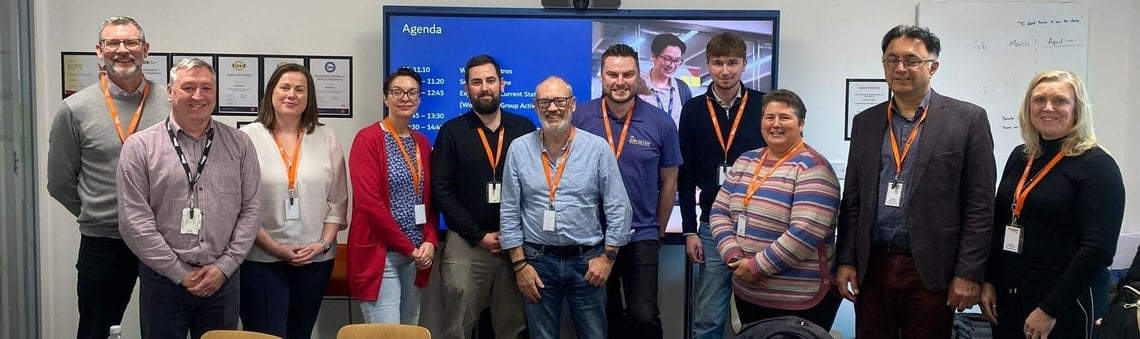
Earlier this month, I facilitated an in-person workshop in Cardiff for our Level 3 members of the Lean Competency System (LCS) community, hosted by Network Rail.
We brought senior Continuous Improvement leaders together to explore a pressing question:
How must Lean and Continuous Improvement learning evolve to remain relevant, credible, and impactful in a rapidly changing world of work and learning?
It quickly became clear that Lean and CI learning is entering a period of strategic repositioning. This blog explores three themes that stood out most strongly and will inform my upcoming whitepaper on the future of CI and Lean learning.
Change is Not Optional
One message emerged early: Lean and CI learning isn’t broken, but it risks drifting out of alignment with how organisations now operate.
Global competition, cost pressure, hybrid working and rapid advances in automation and digital tools are reshaping the environment in which Continuous Improvement capability must be built.
The fundamentals of Lean remain essential. Organisations still need structured problem solving, systems thinking, and the ability to deliver lasting change. What has shifted is the context in which this capability must now be developed and sustained.
Historically, development relied heavily on classroom learning, on-site coaching, and structured programmes. These approaches created depth and discipline and still matter. But they now sit alongside distributed teams, compressed timelines, and growing expectations for faster impact.
If CI learning does not adapt, it risks becoming less effective at building the capability organisations now need.
The workshop also highlighted a shift in emphasis. Tools and methods remain vital, but future capability development must place greater weight on behaviours, leadership, and embedding improvement into everyday work. The profession has invested heavily in teaching tools; the next stage is ensuring those tools are applied effectively within organisational systems and leadership practices.
How CI learning is delivered must evolve while preserving the “magic” of real-world application and in-person coaching.
The Future Learner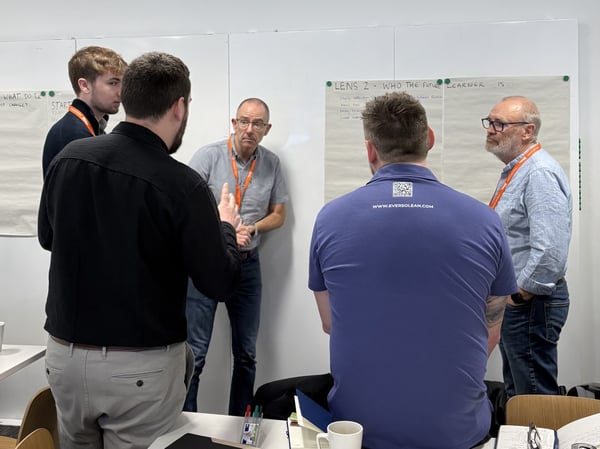
We then explored the expectations of the next generation of Continuous Improvement professionals.
Today’s learners are digital-first, used to instant access to information and short, focused content. Most importantly, they expect learning to translate quickly into practical application.
At the same time, organisations expect visible value from development investments, while individuals increasingly seek clear pathways that support long-term career progression.
This creates real tension. Learning must become more flexible and accessible while still providing the depth, credibility, and professional recognition the discipline depends on.
This led to a discussion about the importance of professional pathways. As learning becomes more flexible and diverse, clear and structured routes for development become even more critical.
Despite the need to evolve, there was strong alignment on what must not be lost. Shared learning experiences remain vital, supported by immediate application and coaching. There was also clear resistance to tick-box approaches that prioritise completion over capability building.
The challenge is not to digitise existing models, but to design approaches that reflect how people now learn and work while preserving the structured development the profession requires.
The Role of the CI Community
A consistent theme throughout the workshop was that the future of Continuous Improvement learning will not be shaped by external forces alone. The profession must take a deliberate and coordinated role in its own development.
Attendees emphasised the importance of the Level 3 community leading by example and working with others to help define what good looks like in practice. There was strong agreement that the community should play a more visible role in demonstrating the value and impact of the profession across organisations and sectors.
This includes strengthening how benefits and ROI are measured and communicated, demystifying the impact of Improvement activity, and continuing to experiment with new delivery models and emerging tools.
There was also recognition that stronger peer networks and more accessible communities of practice will be increasingly important in supporting practitioners at every stage of their careers.
Looking ahead, we explored opportunities to position Continuous Improvement as a profession of choice, engage earlier with education pathways, and develop clearer routes for professional recognition.

The Next Era of Continuous Improvement Learning
The workshop themes point to a profession that is evolving rather than reinventing itself. The fundamentals of CI remain essential, but the way capability is developed, recognised, and sustained must continue to adapt.
For the LCS community, this creates both responsibility and opportunity. By taking a structured and deliberate approach, the profession can strengthen its credibility, expand its influence, and ensure that Continuous Improvement remains a career path of choice for future generations.
I’ll be exploring the emerging themes shaping CI and Lean learning in more depth in my upcoming whitepaper.
For organisations seeking a structured approach to developing Continuous Improvement capability, you can learn more about LCS organisational accreditation here.


.png?width=560&height=307&name=Mask%20group%20(4).png)