

What happens when a school loses their Business Manager?
Hannah Taylor explained that people don’t get paid, fire drills don’t happen, catering never gets ordered and children don’t eat. So when she was asked to step in as the school Business Manager in a previous role, covering a colleague on long-term sick leave, Hannah realised one person cannot hold a role together solely by themselves.
“All this information is in the head of one individual who’s off on long-term sick,” she told the LCS Conference 2026. “The one person who knew it wasn’t there.”
Hannah now works at OpX, and her story wasn’t really about schools. It was about any continuous improvement system that lives in one person’s head instead of living within the organisation.
She told it alongside her colleague Adam Kinsey in the conference’s headline keynote.
One person, three spreadsheets and a Teams channel
Adam and Hannah opened with Thunderbirds. Something goes wrong somewhere in the world, International Rescue gets the call, and a specialist team arrives with its own machines and somehow sorts it out.
They asked delegates which Thunderbird they were expected to be at work:
- The first responder everyone looks to?
- The heavy lifter with the toolkit?
- The fixer who knows who to call?
When they asked who was expected to be more than one, hands stayed up. Several people admitted to being all of them.
They then explained, there lies the problem. International Rescue had specialists, dedicated machines and a whole support operation on Tracy Island, yet as Adam put it, “a lot of improvement teams have one person, three spreadsheets and a Teams channel.”
When the improvement person becomes the system
Adam and Hannah explained how OpX came to be the product it is now: One system of record that keeps every idea, project and outcome connected — and auditable — as improvement scales. Rather than deciding straight away what their product should become, the OpX team started by listening to improvement practitioners across sectors. The frustrations they heard were strikingly similar:
- “I spend half my time chasing updates.”
- “Leadership wants to see the value.”
- “We’ve got a tracker for that somewhere.”
- “Someone left, and half the context went with them.”
These weren’t separate problems but symptoms of the same one. The methodology and capability was there, but the infrastructure underneath hadn’t caught up, so someone had to compensate.
“The improvement person had become the system.” Hannah, OpX
Yet as all delegates at the LCS conference feel as improvement specialists, good improvement people are brilliant at compensating. They remember what’s happened and who’s doing what. They join the dots between departments and chase every action. They find the old presentation buried deep in SharePoint, explain the programme to every new director, and rebuild the context each time someone joins. As Hannah put it, they end up “carrying the operating memory of the whole improvement system around in their head.”
The hidden cost of a single point of failure
Adam had seen a version of the same problem in a very different world: Royal Navy submarines and intelligence. “Information isn’t very useful simply because somebody once knew it,” he said. You need continuity. Where did it come from? What did we know at the time? What did we decide, what happened next, and what did we learn?”
Without that, every new person starts again and every time a key improvement person leaves, the organisation loses far more than one employee. It loses the history, the relationships and the reasoning behind years of work.
It’s a strange gap when you think about it. Sales has its systems as do finance and HR. Improvement, the function meant to make everything else work better, is often run on file names like “version 1 FINAL 12”.
Every improvement leaves behind two things
According to OpX, every improvement produces two things. The first is the result: the KPI, the saving, the faster process, the better quality. Most organisations are good at capturing that.
The second is the learning, and it disappears quickly. You need to be questioning what did we discover? What failed? Which assumptions turned out to be wrong? What would we do differently, and who else could use this?
When that learning vanishes into a slide deck or someone’s memory, the organisation has paid for it once and thrown half the value away.
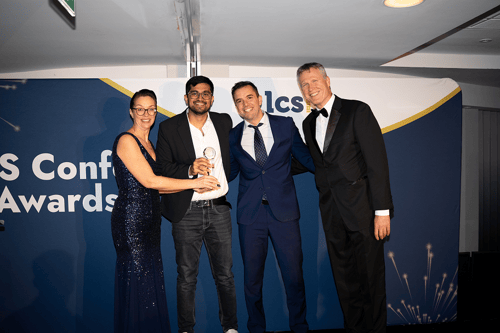
In Practice: Hilti After Market Services
Hilti AMS, winner of the Culture of Improvement award, made learning visible on purpose. Its award entry describes introducing a digital improvement platform that made improvements easy to record and visible across 59 Tool Service Centres and four distribution centres.
Employees can now see what other teams are improving. The result, in Hilti’s words, is learning that travels across sites, “reducing local optimisation and reinvention.”
What a continuous improvement system should actually keep
Storing files isn’t the same as keeping knowledge. Most organisations don’t lack information. They have folders, trackers, slide decks and six versions of the benefits spreadsheet. What they lack is a usable record that connects it all.
OpX was clear that the answer isn’t another methodology, toolkit or transformation PowerPoint but a system of record for improvement: somewhere that keeps the original context, the decisions, the evidence, the outcomes and the learning together. Six months later, someone new should be able to understand what happened without hunting down the person who happened to be in the room.
They boiled it down to three tests:
- Keep the context, so improvement doesn’t depend on one individual.
- Show the impact, so leaders can see what all the activity is actually producing.
- Scale the learning, so one team’s work makes the next team’s work better.
That third test isn’t about copying and pasting solutions. Like showing your workings at school, a good record lets other teams see the journey, including the parts that didn’t work, and adapt it to their own situation.
Freeing talented people to do the work only people can do
However, as they stated, none of this is about replacing improvement professionals. It’s the opposite.
“It’s not about getting rid of talented people,” Hannah said. “It’s to stop talented people spending so much of their time pulling strings behind the scenery.” Chasing, rebuilding, remembering, reporting and connecting everything manually leaves little time for the work that genuinely needs people.
With the right infrastructure, the conversation with leadership changes too. Instead of repeatedly explaining itself, the improvement function can answer the questions that matter. What’s already happening around this problem? Who knows about it? What did we learn last time? That’s when a continuous improvement system stops relying on a team that has to justify itself, and improvement becomes part of how the organisation works.
One of the post-it notes delegates left on the LCS board at the end of the day put it in four words: “Individuals do not equal infrastructure.”
What system would be left behind?
Adam and Hannah closed with a question…
“Think about your improvement work today. The projects, the ideas, the conversations, the decisions, the learning. Now imagine your spreadsheets and Teams channels disappeared tomorrow, and the people who hold all that knowledge moved on.
What system would be left behind? Would someone new understand what you tried, what happened and what you learned? Or would they just find the files?”
This article is part of our series on the big themes from the LCS Conference 2026. Read the first: Scaling Continuous Improvement: What Happens When Your CI Team Disappears?
Build the infrastructure your improvement team deserves
OpX gives improvement teams a system of record to keep the context, show the impact and scale the learning, so your best people can spend their time improving, not chasing.